H2Nano V3 Hydrogen Water Bottle
A flexible portable hydrogen water bottle for users who want a compact personal flask that can also work as a generator base for larger compatible water bottles.
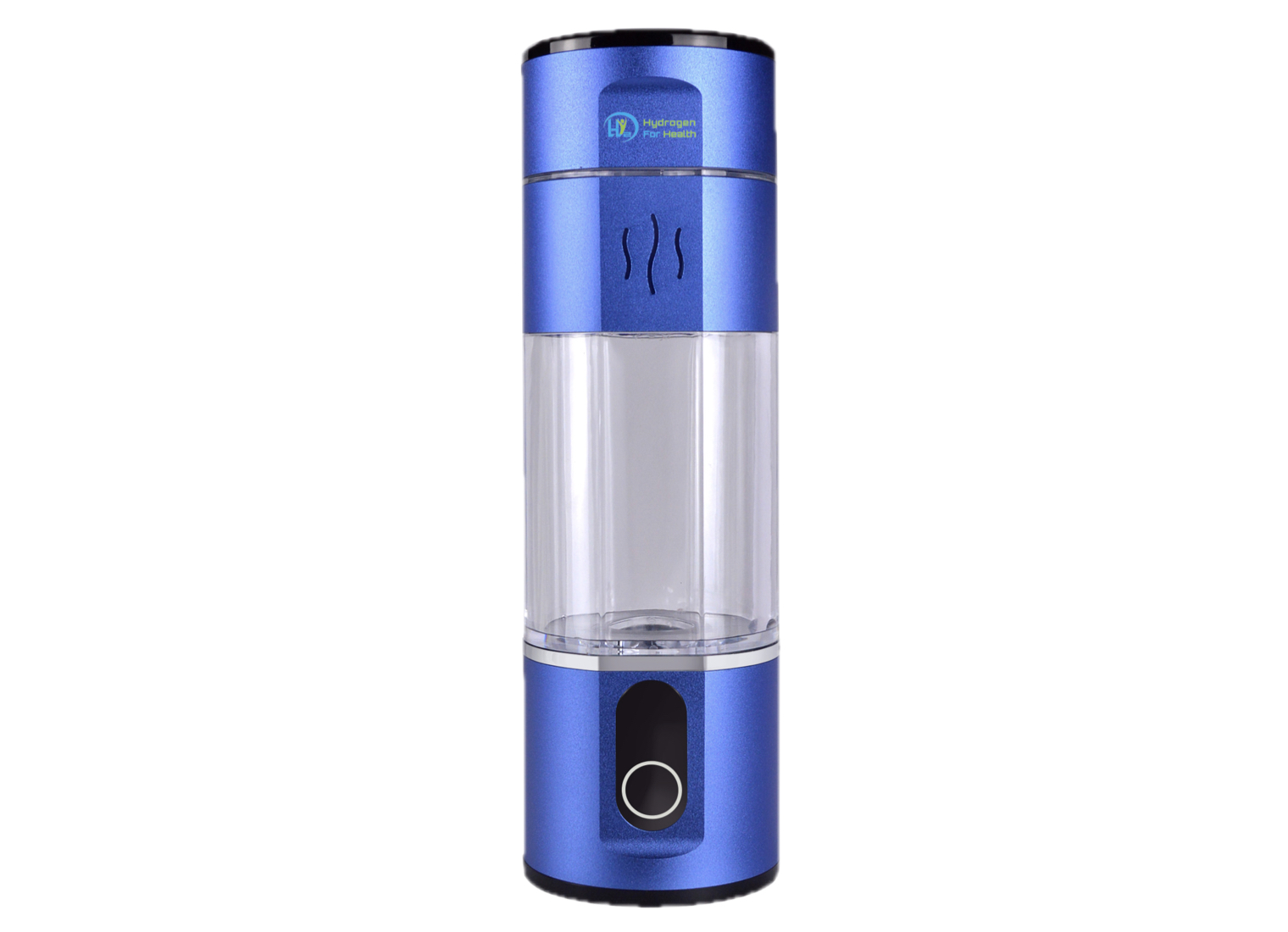
Product image: H2Nano V3 Hydrogen Water Bottle
Quick summary
The H2Nano V3 Hydrogen Water Bottle is the Editor’s Choice within the H2|HPL® portable hydrogen generator Top Picks. It is designed for users who want a flexible, travel-friendly hydrogen water bottle that can work both as a compact personal flask and as a generator base for larger store-bought water bottles.
Its main strength is adaptability. In standard use, the H2Nano V3 works with its included 230 mL chamber for quick personal servings. In adapter mode, the upper bottle can be removed so the generator base can attach directly to compatible 1L or 2L plastic water bottles, giving it a stronger daily-mobility role than many fixed-capacity portable hydrogen bottles.
Compared with the Qcup H2 Alpha Hydrogen Water Bottle with 7.83 Hz, the H2Nano V3 is less focused on resonance-style wellness positioning and more focused on practical day-to-day bottle versatility.
Compared with the Echo Flask Hydrogen Water Bottle, it is less premium and less smart-tech-led, but also simpler and more adaptable for larger bottle use.
Why it made the H2|HPL® Top Picks list
The H2Nano V3 made the H2|HPL® Top Picks list because it offers one of the clearest portable-use cases in this category.
Many hydrogen water bottles are limited by their own internal chamber size. Once the bottle is full, that is the maximum amount of hydrogen water the user can prepare in one cycle. The H2Nano V3 is more flexible because it can be used either as a compact flask or as a hydrogen-generating adapter for larger compatible water bottles.
That makes it especially useful for travel, workdays, commuting, bedside use, and people who want something more portable than a countertop pitcher but less complicated than a smart high-pressure bottle.
It also has a stronger technical profile than basic entry-level electrolysis bottles, with SPE/PEM membrane technology, platinum-coated titanium electrodes, and a bottom exhaust design intended to separate unwanted by-products away from the drinking water pathway.
What this system is designed to do
The H2Nano V3 is designed to generate hydrogen-rich drinking water in a portable format.
In its standard setup, the user fills the included 230 mL chamber, attaches it to the generator base, and runs an electrolysis cycle. This makes it suitable for quick single servings, short commutes, bedside hydration, or simple daily use.
Its more distinctive use case is the larger bottle-adapter mode. The upper chamber can be removed, allowing the generator base to attach to compatible standard plastic beverage bottles. This gives the product more flexibility than a typical fixed-capacity hydrogen bottle, especially for users who want to prepare more than one small serving.
The system is also designed around clean gas separation. The product data describes pure hydrogen being directed upward into the drinking water, while unwanted by-products such as ozone, chlorine gas, and excess oxygen are vented downward through the base.
For buyers, the practical takeaway is simple: the H2Nano V3 is not just a small hydrogen flask. It is a portable generator base that can be used in more than one bottle configuration.
Who this product may suit
The H2Nano V3 may suit buyers who want a portable hydrogen water option for daily mobility.
It may appeal to people who want hydrogen water at work, while travelling, at the gym, at a bedside table, or during a normal commute. The one-button interface keeps it simple, while the two cycle options give users a choice between quicker preparation and deeper saturation.
- Wants a portable hydrogen water bottle for everyday mobility
- Finds small fixed-capacity bottles too restrictive
- Likes the option of using compatible larger external bottles
- Prefers simple one-button operation over smart-bottle complexity
- Wants broad water compatibility
- Needs a travel, workday, commute, bedside, or gym-friendly option
- Wants a balanced portable bottle rather than a premium smart device
For users comparing the H2|HPL® portable Top Picks, the H2Nano V3 is likely to suit those who want a balanced portable bottle: more flexible than a simple fixed flask, but less expensive and less technology-heavy than the Echo Flask.
Who may be better starting elsewhere
Buyers who want the highest stated hydrogen concentration and smart-bottle experience may be better looking at the Echo Flask Hydrogen Water Bottle. Echo offers touchscreen controls, Bluetooth/app integration, high-pressure engineering, and a higher stated peak concentration.
Buyers who are specifically interested in the additional 7.83 Hz biostacking / resonance-style feature may prefer the Qcup H2 Alpha Hydrogen Water Bottle with 7.83 Hz. The H2Nano V3 is more practical and bottle-adapter focused, but it does not include that additional wellness-positioned layer.
- Wants a large built-in bottle rather than a small 230 mL chamber
- Prefers touchscreen controls, app tracking, or smart-bottle features
- Specifically wants the 7.83 Hz resonance-style feature
- Wants the highest stated concentration claim in the category
- May forget the low-output charger requirement
- Does not want to use compatible external plastic bottles
The H2Nano V3 may also not suit users who are likely to forget charger requirements. It should be charged using a low-output 5V/1A or 5V/2A charger, not a high-wattage fast-charging PD block.
Key features and what they mean
Dual-form bottle design
The H2Nano V3 can be used in two ways: as a standard compact flask or as a generator base for compatible larger plastic water bottles.
230 mL internal chamber
The included chamber holds 230 mL. This is convenient for quick use, but buyers should see the native flask as a compact serving chamber rather than a large daily bottle.
Larger bottle adapter mode
The generator base can attach to compatible standard 30 mm plastic beverage bottles, including larger 1L or 2L bottle formats. This is especially useful for travel and workday use.
1.0 to 3.5+ PPM concentration
The stated hydrogen concentration range is 1.0 to 3.5+ PPM, with the higher end linked to larger sealed bottle use and longer saturation.
DuPont N117 SPE/PEM membrane
The product data describes the H2Nano V3 as using a DuPont N117 ion exchange membrane with SPE/PEM technology, supporting cleaner gas separation.
7-layer platinum-coated electrodes
The H2Nano V3 uses titanium electrodes with a 7-layer platinum coating, supporting durability and more stable electrolysis performance over time compared with very basic designs.
Broad water compatibility
The supplied data states that the H2Nano V3 can be used with reverse osmosis, distilled, tap, or mineral water because unwanted by-products are vented away from the drinking-water pathway.
Two cycle options
The bottle offers a 5-minute fast cycle and a 20-minute hyper-saturation mode, giving users a practical choice between quick use and deeper saturation.
USB-C charging limitation
The H2Nano V3 uses USB-C charging, but it should be charged with a standard low-output 5V/1A or 5V/2A charging brick rather than high-wattage fast chargers or smart PD blocks.
How it compares within the H2|HPL® Top Picks
Within the H2|HPL® portable hydrogen generator Top Picks, the H2Nano V3 Hydrogen Water Bottle sits in the most balanced daily-mobility position. It is more adaptable than a standard small-capacity hydrogen bottle, more straightforward than the Echo Flask Hydrogen Water Bottle, and less wellness-niche than the Qcup H2 Alpha Hydrogen Water Bottle with 7.83 Hz.
H2Nano V3 Hydrogen Water Bottle
The H2Nano V3 is the Editor’s Choice because it offers a strong middle ground: portable enough for daily mobility, more flexible than many small flask-style bottles, and less complex than a premium smart bottle.
Qcup H2 Alpha
Compared with the Qcup H2 Alpha, the H2Nano V3 is less focused on added biostacking or resonance positioning and more focused on practical bottle versatility.
Both products use a portable base design and can work with standard external water bottles, but the Qcup places more emphasis on higher stated hydrogen concentration and its 7.83 Hz Schumann-resonance-style feature.
Echo Flask Hydrogen Water Bottle
Compared with the Echo Flask, the H2Nano V3 is less premium and less technology-led. Echo offers higher stated concentration potential, high-pressure engineering, touchscreen controls, Bluetooth/app integration, and a more robust PPSU chassis.
The H2Nano V3 is better suited to buyers who want a portable hydrogen bottle that remains practical, relatively simple, and adaptable to larger store-bought bottles.
Practical ownership notes
The H2Nano V3 is best treated as a portable generator system rather than just a small bottle.
For quick use, the 230 mL chamber is convenient. For larger hydration needs, the adapter mode is likely to be the more useful feature. Buyers should check bottle-thread compatibility and remember that the larger-bottle setup is where the product’s flexibility becomes more valuable.
Charging habits are very important. The H2Nano V3 should not be charged using high-wattage fast chargers, MacBook/iPad-style PD chargers, or other smart power-delivery blocks. A standard low-output 5V/1A or 5V/2A wall brick is the safer match.
Users should also remember that hydrogen water is best consumed soon after generation. Even when a sealed bottle helps trap gas during the cycle, hydrogen naturally dissipates once the container is opened.
The product includes the USB-C cord, but users may need to supply their own suitable low-output wall charger. This is a small detail, but it matters because using the wrong charger could create an avoidable failure.
Strengths
The H2Nano V3’s main strength is its dual-form design. It can be used with its included 230 mL chamber for quick personal servings, or the generator base can be attached to standard larger plastic water bottles using the threaded adapter format.
This gives it a practical advantage over many portable hydrogen bottles, where the user is restricted to one small internal chamber. The ability to use larger 1L or 2L bottles makes it more useful for travel, workdays, or users who want more than a single small serving.
Its SPE/PEM membrane and 7-layer platinum-coated electrode design also give it a stronger technical profile than basic entry-level electrolysis bottles.
The product’s broad water compatibility is another useful strength. The supplied data states that it can safely handle reverse osmosis, distilled, tap, or mineral water because unwanted by-products are vented away from the drinking-water pathway.
The simple one-button operation also supports daily usability. For buyers who do not want touchscreen controls, app syncing, or resonance features, the H2Nano V3 keeps the experience more direct.
Limitations and trade-offs
The main limitation is the small native flask volume. At 230 mL, the included chamber is suitable for quick hydration, but it is not ideal for users who want to prepare larger amounts without switching to external bottles.
Charging is another important trade-off. The H2Nano V3 requires a standard low-output charging brick and should not be used with fast-charging PD plugs, such as modern laptop or tablet chargers. This needs to be made very clear because using the wrong charger could damage the internal circuitry.
It also does not offer the premium smart features of the Echo Flask. Buyers wanting app tracking, touchscreen controls, hydration reminders, or a pressure-optimised premium chassis may prefer Echo.
Compared with the Qcup H2 Alpha, the H2Nano V3 does not include the additional 7.83 Hz resonance feature and has a lower stated peak concentration claim.
As with all hydrogen water bottles, timing matters. Hydrogen gas naturally dissipates after generation, so the water should be consumed promptly rather than prepared and left open for long periods.
Questions to check before buying
Before buying the H2Nano V3, it is worth checking a few practical points.
- Is the 230 mL native chamber enough for your normal use, or are you mainly buying this for the larger bottle-adapter function?
- Are you comfortable using compatible external plastic water bottles when you want larger volumes?
- Do you have the right low-output 5V/1A or 5V/2A wall plug?
- Would you prefer simple one-button operation, or do you want app tracking, touchscreen controls, and premium pressure engineering?
- Does the 7.83 Hz feature of the Qcup H2 Alpha matter to you?
- How quickly are you likely to drink the water after generation?
- Do you want a practical travel/workday bottle or a more premium smart-bottle experience?
H2|HPL® editorial verdict
The H2Nano V3 Hydrogen Water Bottle is a strong Editor’s Choice for buyers who want a practical portable hydrogen water generator without moving into smart-bottle complexity.
Its value lies in flexibility. The small included chamber is useful for quick servings, while the external bottle-adapter mode gives it a much more practical role for workdays, travel, and larger-volume use.
It is not the most premium portable bottle in the group, and it does not offer the highest stated concentration claim. The Echo Flask is stronger for smart features and high-pressure engineering, while the Qcup H2 Alpha adds the 7.83 Hz wellness-positioned feature and a higher stated concentration claim.
However, the H2Nano V3 may be the easiest to understand and use day to day. For many buyers, that balance of portability, adaptable bottle use, broad water compatibility, and simple operation will be exactly the point.
Best fit: users who want a flexible portable hydrogen water bottle for daily mobility, travel, and larger bottle-adapter use.
Product CTA
View the H2Nano V3 Hydrogen Water Bottle through the Hydrogen For Health retail partner link below.
View product →Available via Hydrogen For Health
Editorial note / disclosure
H2|HPL® product reviews are written as editorial buyer-assessment guides. They are designed to help readers compare product types, features, suitability, and ownership considerations before purchasing.
This review is based on supplied product information, category comparison, and editorial assessment. It should not be read as medical advice, a treatment recommendation, or a claim that this product can diagnose, treat, cure, or prevent disease.
Users with medical conditions, health concerns, or ongoing treatment plans should seek appropriate professional guidance before using hydrogen water products.
This page may include affiliate links. If you choose to purchase through one of these links, H2|HPL® may receive a small commission at no extra cost to you. This helps support the running of the site and the creation of independent educational content.